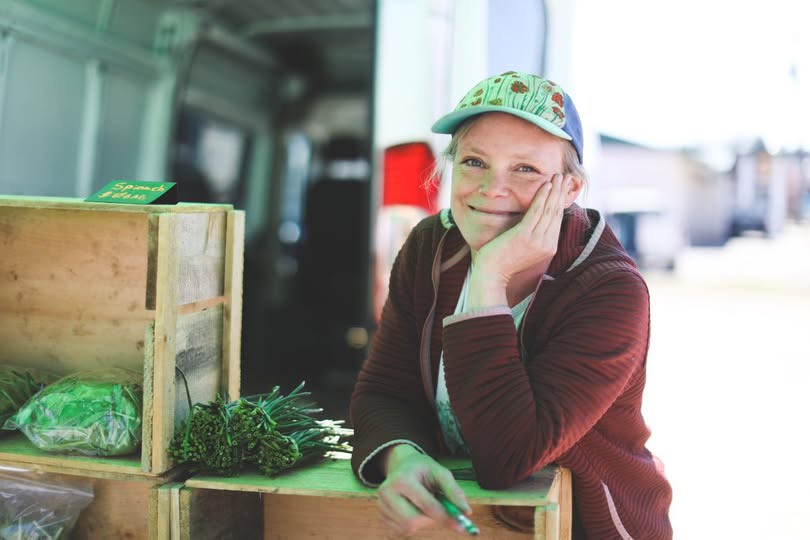
Real Maine and the Maine Department of Agriculture, Conservation and Forestry celebrate the women shaping our state’s agriculture today and inspiring the next generation. We are proud that 2026 has been proclaimed as the Year of the Woman Farmer in Maine. Throughout the year, we have received dozens of nominations for women farmers, agricultural leaders, or young women making an impact to highlight. We have spotlighted, and will continue to spotlight, many of those nominated on social media. We have reached out to some of those who have been highlighted to hear a little more from them.
Johanna Burdet grew up on a small farm in Maine. She says her family “didn’t sell anything,” but her parents “raised meat and vegetables to help feed our family of seven.” Her father was a logger who worked with draft horses, so she grew up around working animals.
After high school, Johanna left Maine to study nutrition, but she “quickly realized I wanted to be involved in growing healthy food, not just studying it.” She studied abroad in New Zealand and went on to earn a degree in sustainable agriculture from Sterling College in Vermont in 2008.
During and after college, she apprenticed and volunteered at a variety of farms to gain hands-on experience. In 2009, Johanna returned to Maine to work on a dairy farm in Skowhegan. Soon after, her former partner and she started Moodytown Gardens in Cornville. In 2012, they purchased our own farm in Palmyra, where they expanded the operation to include vegetables, livestock, and hay. Johanna moved to Canaan in 2024 and am restarting the farm on leased land.
What have you learned from other women who work in agriculture?
One of the biggest things I’ve learned from other women in agriculture is how to balance a lot of competing priorities. So many women farmers are raising children while running a business, caring for a home, and keeping a farm going. It’s a constant process of adjusting, rearranging, and deciding what needs you most that day. There isn’t a perfect balance, but I’ve learned that flexibility is just as important as having a plan.
I’ve also been inspired by the persistence I see in women across Maine agriculture. They’re resourceful, hardworking, and deeply committed to what they do. There’s a certain stubbornness —in the best way — that helps them keep going through crop failures, financial challenges, and long seasons. Their strength isn’t about never struggling; it’s about continuing to adapt and move forward because the work matters.
What is something people in Maine may not know about working in agriculture in the state?
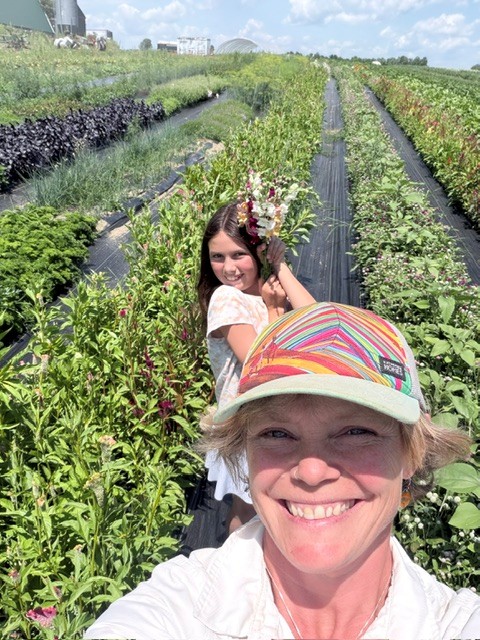
I think something people may not realize is how many different hats farmers have to wear. Growing food is just one part of it. Farmers are also doing their own marketing, sales, bookkeeping, equipment repairs, carpentry, maintenance, and problem-solving every single day.
Especially on small farms, you really have to be willing to learn a little bit about everything. One day you’re planting carrots, and the next you’re fixing the cultivator, building a walk-in, or figuring out how to sell all that spinach before it bolts. It takes a lot of flexibility and resourcefulness, but that’s also one of the things I love about farming. There is always something new to learn.
Growing food is just one part of it. Farmers are also doing their own marketing, sales, bookkeeping, equipment repairs, carpentry, maintenance, and problem-solving every single day.
Johanna Burdet
What does being a part of Maine’s food system mean to you?
Being part of Maine’s food system means everything to me. It’s the work I feel most called to do. I’m a very community-oriented person, and growing food is one of the most tangible ways I know to contribute to the place I live. It connects me to my neighbors, other farmers, and the land itself.
We need more farmers and more farmland, and I’m proud to be one of the people doing this work. Growing food is important, and strong local farms make our communities healthier, more resilient, and more connected. I feel incredibly lucky to be part of that.
What would you say, or what advice would you give, to a young woman aspiring to build a life/career in agriculture?
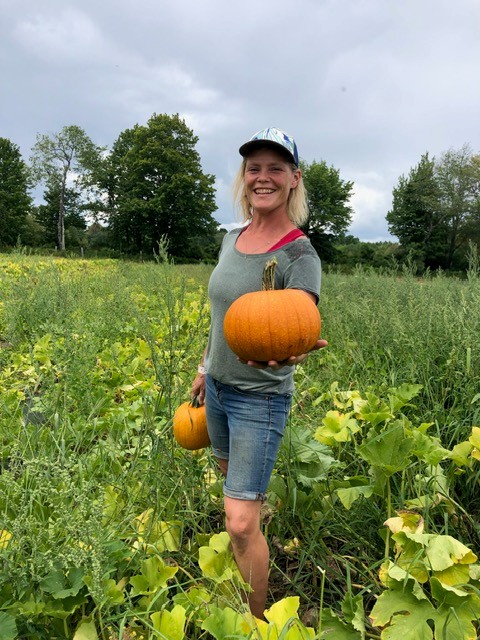
I’d encourage them to be open to what a career in agriculture might look like. Spend time on different farms if you can, ask questions, and learn from as many people as possible. There’s no substitute for seeing different ways of farming and different ways of building a life in agriculture.
Then, when you’re ready, trust yourself. There will always be people telling you how things should be done, but there isn’t one right way. Put the blinders on just enough to stay focused on your own goals and build the farm and the life that fits you. If you’re willing to work hard and stay adaptable, there’s almost always a way forward.