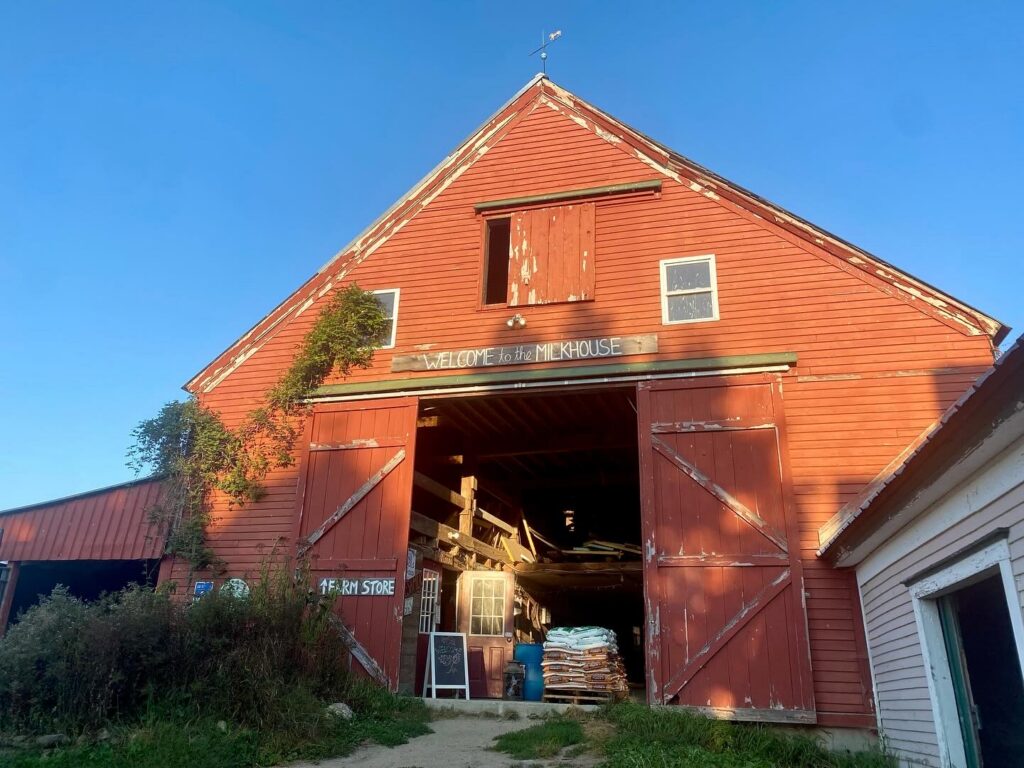
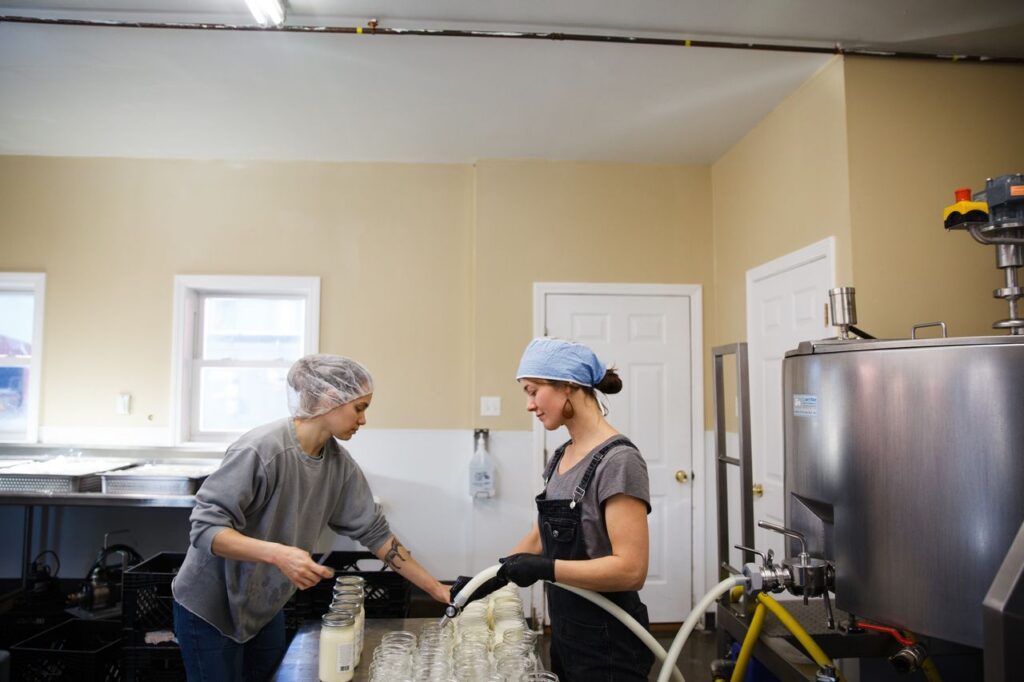
We recently spoke with Caitlin Frame, co-owner of Real Maine member The Milkhouse in Monmouth, an organic dairy farm, creamery, and farm store.
What ingredients are needed to make yogurt? Can you tell us about cultures in yogurt and how those are introduced?
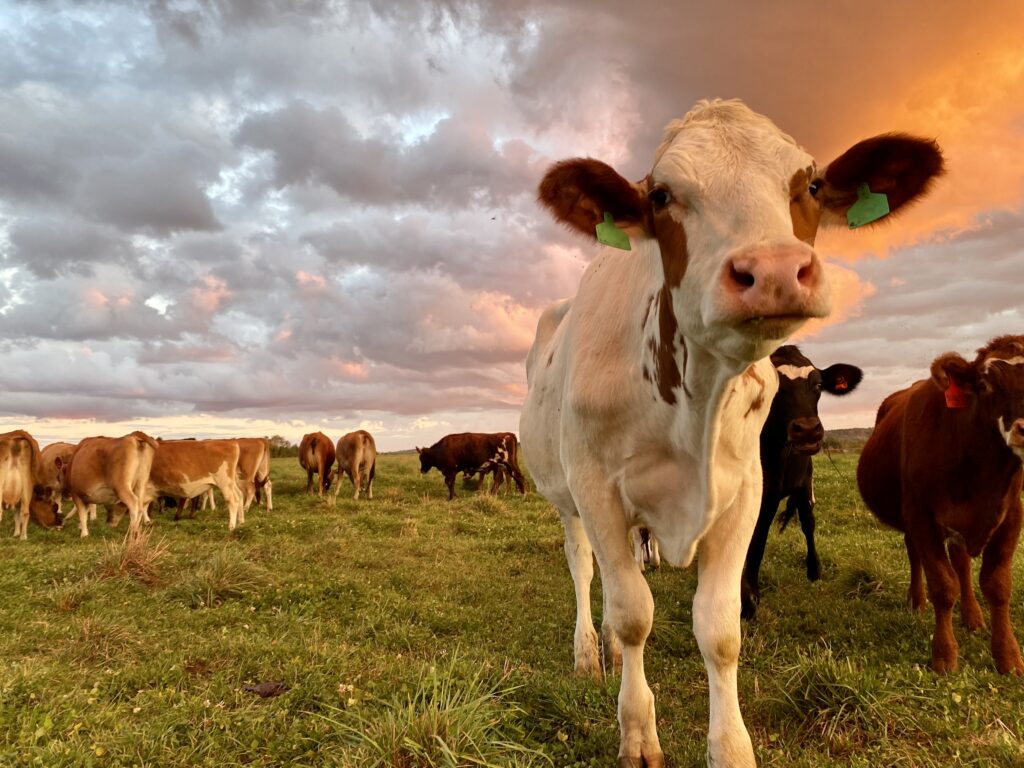
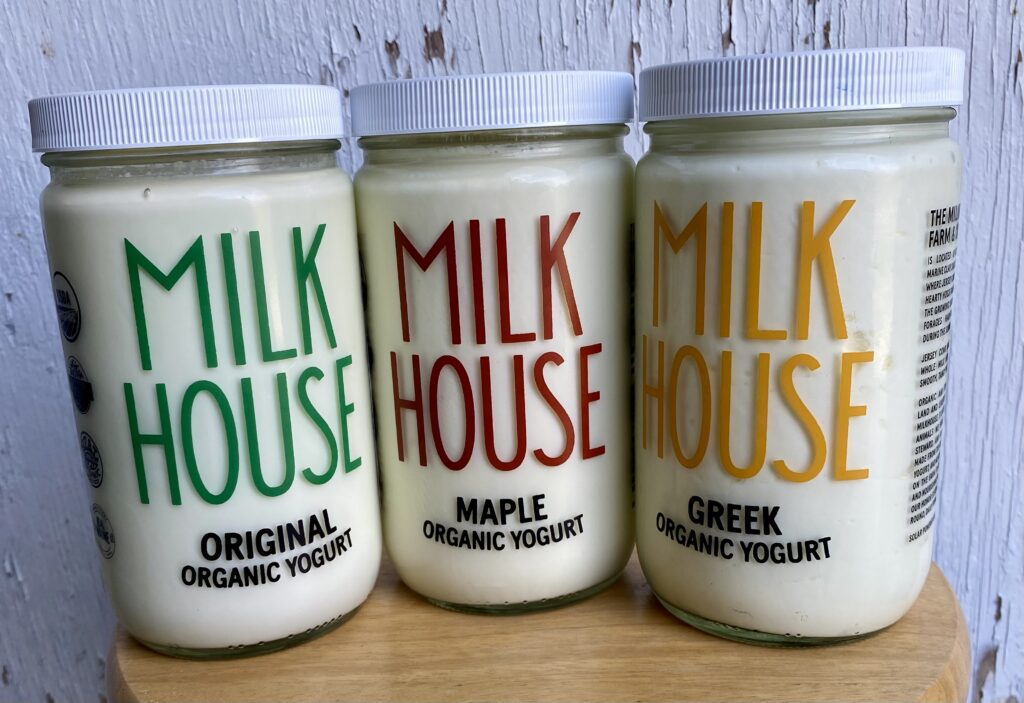
Milkhouse yogurt is made with two ingredients: whole milk from our Jersey cows and probiotic bacteria. Because our Jersey cows’ milk is higher in fat and protein than standardized commercial milk found at the grocery store, it is easily made into thick, rich yogurt without the addition of thickeners often found in commercial yogurts and other dairy products. Milkhouse yogurt is a very simply made whole food!
The strains of bacteria in our yogurt are S. Thermophilius, L. Bulgaricus, L. Acidophilus, and B. Lactis. This combination of cultures produces a high protein, smooth, mildly tangy yogurt full of probiotics. These cultures are introduced after heating and cooling milk in our vat pasteurizer.
How much yogurt does The Milkhouse produce on a weekly/monthly basis? Detail the process from collecting milk from cows to having a finished yogurt product ready for sale.
At the Milkhouse, the cows are milked twice a day, 365 days a year. The milk produced by the cows goes into a few things. First off, yogurt. We make up to 650 gallons of pasteurized yogurt a week, which is packaged in quarts for grocery and natural food stores. Yogurt is also packaged in one- and four-gallon quantities for several school districts, institutions, and some cafes and restaurants. Bottled fluid raw milk is sold at our farm store in Monmouth and at a few other retail locations. And last, we sell fluid bulk milk to several cheesemakers, namely, Winter Hill Farm in Freeport, Cosmic Goat Farm in Litchfield, HayMay Creamery in Farmington, Oaklands Farm in Gardiner, and Spring Day Creamery in Durham. We are not cheesemakers, so it’s very cool to see all the amazing things these cheesemakers/scientists/artists/farmers do with Milkhouse milk. They all make excellent cheese; it is not to be missed!
The Milkhouse crew is made up of Amber, Elena, Rachel, and Caitlin in the creamery, and Andy, Heidi, Grace, Zack, Jakson, and Luke on the farm side of things. The current crew is incredible, and we are grateful to have had so many great crew members over the years. Every single person who has contributed to the growth and continued existence of the Milkhouse has been essential.
What is the difference between, say, Greek yogurt and other types of yogurt?
Greek yogurt is just plain whole milk yogurt that has had whey strained out of it, and what remains is about half the original volume, so it’s considerably thicker than whole milk yogurt, and has higher protein per serving. The strained yogurt is then mixed in a stand mixer to smooth it out. Whole milk yogurt is the OG, and will always be our favorite, but I do understand the appeal of the greek yogurt!
You include ingredients like Maine maple syrup and wild blueberries in your yogurt. Why is it important to you to use those local ingredients?
There is a concept of a ‘foodshed’, which is the geographic region that produces the food for a particular population, defining the flow from origin to consumption, including the land it grows on, the route it travels, the markets it passes through, and the tables it ends up on. For us, it’s been a no-brainer to make our yogurt flavors with foods grown and produced in Maine. We use maple syrup from Gray Jay Maple Works in Jay, and wild Maine blueberries from Merrill’s in Ellsworth.
June is Maine Dairy Month. Tell us something Maine people may not know about being a dairy farmer.
It’s important that people have a sense of all the individuals, businesses, and various support systems that, in turn, support the continued existence of all farms and give any of us a shot at our farm businesses surviving, and hopefully thriving in the long run. We are interdependent with coworkers, customers, neighbor farmers, distribution partners, mechanics, veterinarians, the grain company, local trade professionals, non-profit organizations, state and federal representatives that have the best interests of farmers and eaters in mind, state and federal technical assistance, and grants. Farms are an integral piece of local economies.
At the Milkhouse, we do this work for the love of the land and animals, and feeding people in our local and extended community. It’s a huge challenge and a real privilege to run a small business, and we are so grateful to all the folks who support us every day.
Real Maine is the state’s official agriculture and agritourism promotions program. From flowers to berries to ice cream sundaes, plan your Real Maine summer agricultural experience. Visit www.RealMaine.com to connect to farms, food, and agriculture throughout Maine.