
When traveling through our great state this summer, a great way to sample a meal that combines a number of different Real Maine ingredients is to try some craft pizza.
All of these parts can add up to a delicious pie: crust made with local flour, Maine cheese, and any number of toppings that come from our state’s farms and food businesses. Adding in a local craft beer, wine, cider, or spirit pairs well.
A great place to start your next trip for craft pizza is exploring the Maine Craft Pizza Initiative’s webpage. A project of the Maine Grain Alliance, the initiative highlights “values that encompass sustainable farming and energy practices, fresh ingredients grown nearby in each of Maine’s four seasons, and skilled craftsmanship.”
Make sure to also go to www.RealMaine.com to plan your next trip for craft pizza or agricultural experience, and to connect to farms, food, and agriculture throughout Maine.

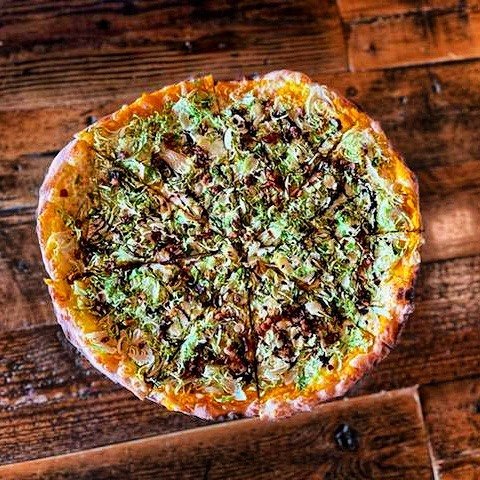
OVER-THE-TOP TOPPINGS
There is an incredibly wide spectrum of topping ideas for pizza. Here are some of the many examples of Real Maine businesses getting creative with local, fresh toppings:
- Bigelow Brewing Company in Skowhegan – Their “Opa” pizza includes artichokes and Kalamata olives as toppings.
- Boothbay Craft Brewery in Boothbay – The “Hungry Botanist” pie includes spinach, broccoli, microgreens, and edible flowers as toppings.
- Cushnoc Brewing Co. in Augusta – The “Mill Park” has a roasted butternut squash base and includes shaved Brussels sprouts as a topping, along with bacon and a balsamic drizzle
- Fogtown Brewery in Ellsworth – Their “Mushroom Kingdom” pizza has a white sauce base and a medley of mushrooms and roasted leeks as toppings.
- The Miller’s Table at Maine Grains in Skowhegan – On weekends, pie toppings include local apples from Cayford Orchards(to pair with pulled pork) and ricotta from Crooked Face Creamery.
- Maine Beer Company in Freeport – Their “Pesto & Cheese” pizza offering includes local goat cheese and honey as toppings.
- Stutzman’s Farm Stand & Bakery in Sangerville – A local favorite is Stutzman’s pizza buffet at their café. A recent offering on the buffet included sliced beets and potatoes.
- The Good Crust in Canaan – A favorite pie that they have featured include the “Pizza Expo Classic,” which is topped with Eureka Farms sweet Italian sausage, onions, peppers, and Creamy Acres small batch mozzarella.
Other local pizza toppings to be sure to sample include Maine wild blueberries, lobster meat, fiddleheads, asparagus, and local meat, such as hamburger and chicken.
GROW A PIZZA GARDEN
There is always the option to make your own craft pizza at home, as well, using local ingredients like Maine grains and flour, sauce, and cheese, but here’s an idea for planting this summer: how about a pizza garden where you grow toppings you can add to your pizza from your own backyard?
You can set aside a part of your plot for a pizza garden or grow in containers. Some ingredients could even grow in a sunny window.
It’s a great time to purchase some “pizza garden” seedlings and the supplies to grow them. Your local farm store, farmers’ market, greenhouse, or nursery is a great place to start your search for seedlings (make sure you go to www.RealMaine.com to find the one nearest to you). You’re likely to find separate areas dedicated to different types of seedlings. Many farms, greenhouses, nurseries, and garden centers have experienced staff who can offer advice. Once purchased, try to plant your seedlings as soon as possible.
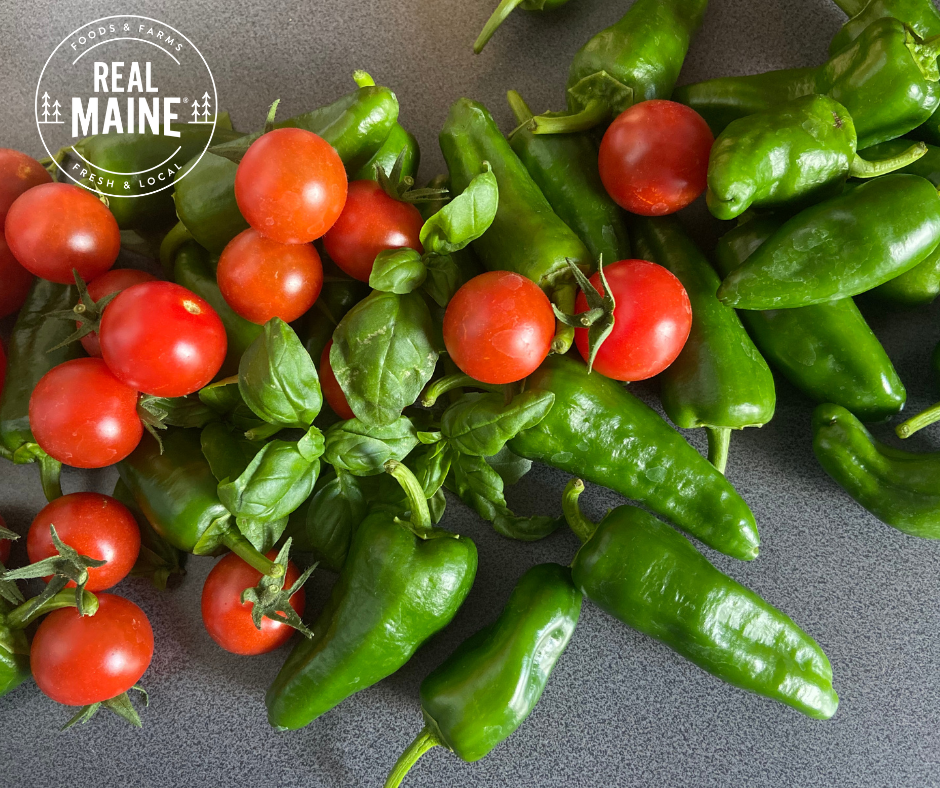
Here are some basics to get your “pizza garden” started:
- Tomatoes – use tomatoes to make a sauce or to top your pizza. Common types of tomatoes include “cherry” tomatoes (small, sweet, early to ripen, good for a topping), and “paste” tomatoes (low pulp, good for cooking and sauces; an example is Roma).
- Basil – a natural complement to tomatoes. Basil loves the heat and is easy to grow in whatever space/container you have for it. The smell of fresh basil is always welcome. Chop it up and add it to sauces or use it as a topping or garnish.
- Oregano – An herb that is used widely in pizza sauces and as a garnish. Oregano is also easy to grow wherever you plant it.
Here are some more ideas to include in your “pizza garden”:
- Peppers – A wide variety of peppers make great additions to pizza from mild and sweet (an example being a Bell pepper) to hot peppers (jalapeno and chipotle). Peppers also love the heat for growing.
- Summer squash and zucchini – If you use these as pizza toppings, make sure you shred or slice them thin and squeeze out any excess water.
- Eggplant – Before using eggplant as a pizza topping, make sure you pre-cook it by roasting, pan-frying, or grilling slices or cubes until golden brown before adding them.
There is a diverse range of fresh ingredients that can be used in making your own pizza – the sky is the limit. You can opt for the traditional route or maybe for something more creative.
RECIPE: STONE-GROUND FLOUR PIZZA DOUGH
Makes two medium pizzas or three smaller pizzas
Ingredients:
500 g flour
- 300 g stone-ground bread flour or sifted wheat flour
- Stone-ground flour can be purchased from Real Maine members like Maine Grains and Aurora Mills and Farm
- 200 g all-purpose or high-gluten flour
350 g water
10 g salt
2 g instant yeast
15 g olive oil, optional
5–10 g honey or sugar (optional – helpful for browning)
Method:
- Mix flour and water first. Combine the flour and water until no dry spots remain. Let sit for 20–30 minutes. Stone-ground flour benefits from this rest because it absorbs water more slowly.
- Add yeast, salt, and oil. Mix/knead until the dough comes together and feels smoother. It may be a little tackier than white-flour dough.
- Bulk rise. Cover and let rise at room temperature for 2–3 hours, folding once or twice if you can.
- Divide and ball. Divide into 2 or 3 dough balls, depending on pizza size. Lightly oil containers or a tray.
- Cold ferment. Refrigerate for 24 hours. This really improves flavor and makes dough easy to handle.
- Bring to room temperature. Take dough out 2–3 hours before baking.
- Bake hot. Bake on a preheated stone/steel at your oven’s highest temp, usually 500–550°F, for 6–10 minutes, depending on thickness and toppings.
Recipe contributed by The Good Crust